
 To many medical professionals, embryonic stem cells hold the future key to regenerative medicine and tissue replacement after injury and diseases such as diabetes, Parkinson’s disease, traumatic spinal cord injury, muscular dystrophy, heart disease, and vision and hearing loss.
A team of UT College of Medicine researchers has studied embryonic stem cells and their capacity to self-renew and differentiate into more than 220 cell types, known as pluripotency, and the importance of fully utilizing this capacity.
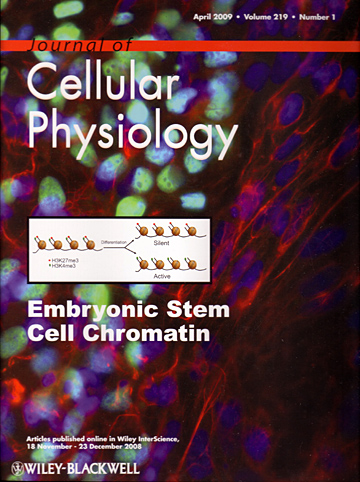
A recent issue of the Journal of Cellular Physiology included the article titled “Chromatin Remodeling in Embryonic Stem Cells: The Balance Between Pluripotency and Differentiation,” and featured a figure from the article on the front cover.
The joint lead authors of the article are Dr. Ivana De La Serna, assistant professor of biochemistry and cancer biology, and Bridget Keenen, predoctoral student in the Biomedical Sciences Graduate Program.
“In order to maximally utilize the potential of embryonic stem cells for clinical application, it will be important to understand the processes that maintain pluripotency as this ability is lost when cells become differentiated to a particular cell type,” De La Serna said.
The article focuses on epigenetic, or external mechanisms, that regulate embryonic stem cell pluripotency.
“Epigenetics involves the stable regulation of gene expression by mechanisms that do not result in changes in DNA sequence,” De La Serna explained. “One important epigenetic mechanism for controlling gene expression involves change in chromatin structure.”
De La Serna’s figure chosen for the journal cover is a bivalent mark on the chromatin that is distinctively a characteristic of embryonic stem cells. These marks are thought to be an important determinant of embryonic stem cell pluripotency because they prime specific genes for activation when the appropriate cues are presented.
“We were very pleased to see our figure on the front cover of the journal because it emphasizes the importance of chromatin structure in the regulation of gene expression,” De La Serna said.